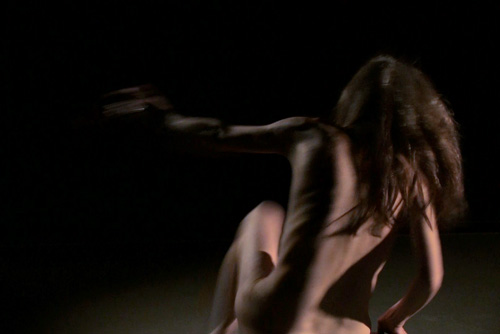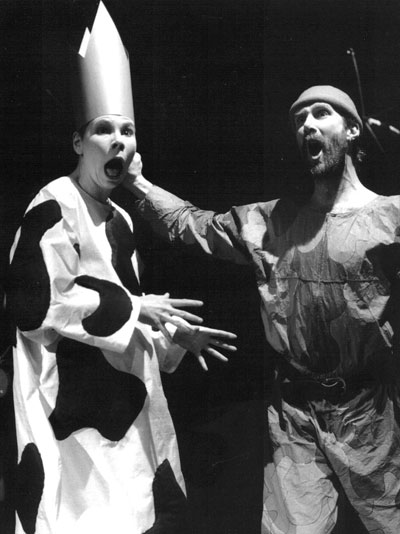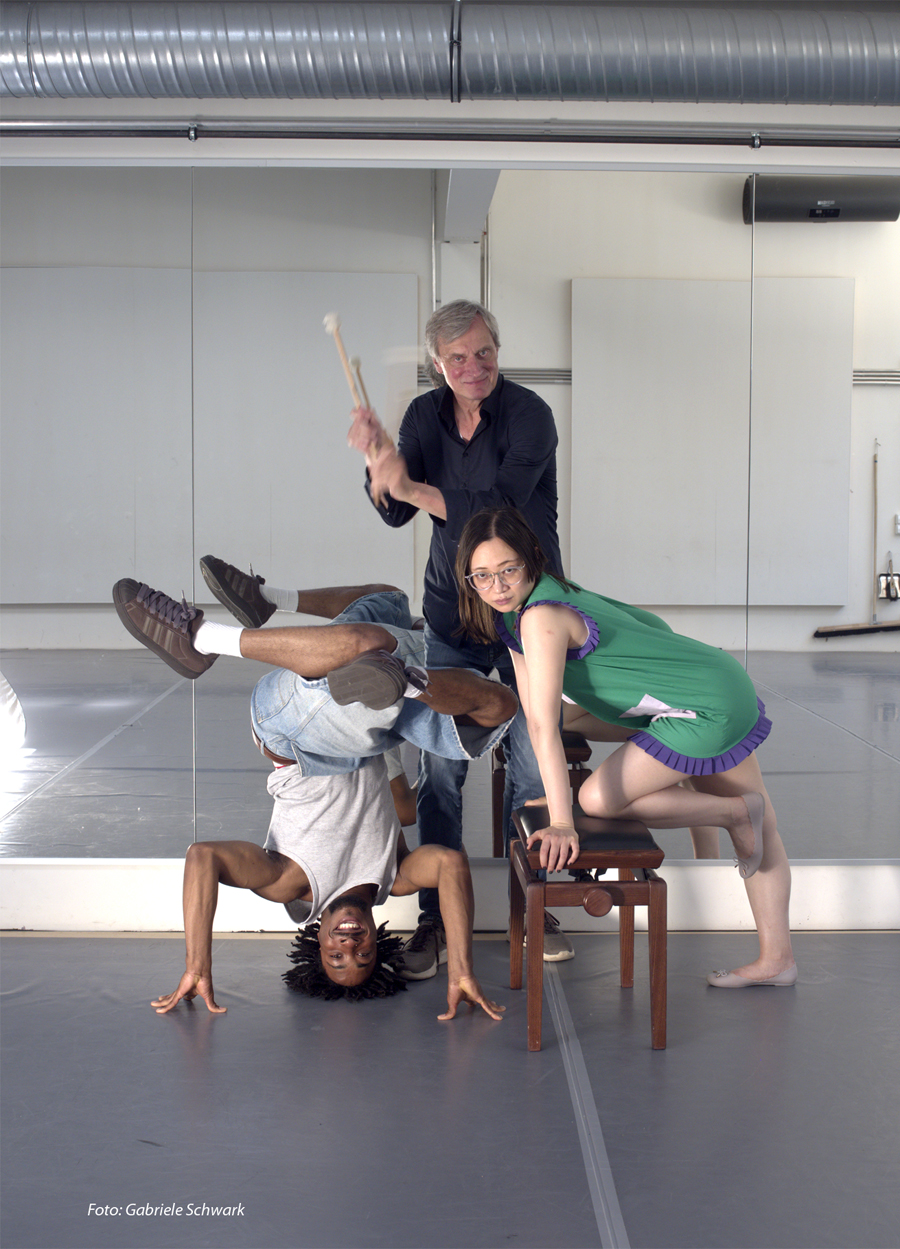
Thursday, October 1, 2026 (public performance)
Friday, October 2, 2026 (premiere)
Saturday, October 3, 2026, and Sunday, October 4, 2026
at 8:00 p.m. each night
at the Jupi Bar, Caffamacherreihe 37-39, 20355 Hamburg
(in German)
Admission is by donation!

About the play:
“Le monde est fou!” is based on the novel “Tram 83” by Fiston Mwanza Mujila. The play is set in a fictional African city, but at the same time it also reflects our own world. The main characters are two very different friends: Lucien, a rather introverted writer who returns from Europe at the beginning of the novel, and Requiem, a charismatic but unscrupulous con artist who takes him in. Next to the dilapidated train station where Lucien arrives stands Tram 83, a bar and the vibrant heart of the city. “All roads lead to Tram 83,” the author said in an interview, adding, “All roads lead to sin.” Every evening, musicians perform on a small stage, among them the “Diva of the Railroad Tracks,” who captivates everyone with her voice and the recordings of approaching steam locomotives she uses to accompany her compositions. Music plays an important role in the bar, in the novel, and in the performance.
Requiem sensed that someone was there. He furrowed his brow: Lucien, in the flesh. Requiem walked toward him. He saw that his friend had lost a great deal of weight. That an era was coming to an end, that a civilization was on the brink of collapse.
Cast:
Dirk/Lucien: Dirk Achim Dhonau
Noah/Requiem: Noah Tete
Diva of the Railroad Tracks: Dong Zhou
Directed by: Isabelle McEwen
; Music by: Dirk Achim Dhonau, Dong Zhou
Dirk Achim Dhonau
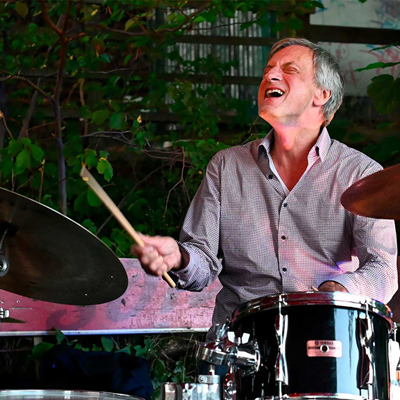
Dirk Achim Dhonau’s musical focus is on jazz and improvised music. In 2023, he was awarded the Hamburg Jazz Prize. He has performed in various ensembles and is currently a member of the following band projects: the “Lisa Stick Quintet/Septet,” the “Tiny Electric Trio,” Cleménce Manachèr’s “Hopscotch,” and the “Dirk Achim Dhonau Quartet.” He has been collaborating with Dominique Horwitz for many years as part of his Jacques Brel evening, co-founded “Die Pathognomiker” with Lars Rudolph, participates in radio plays, and works on theater projects. He has performed at the Hamburger Kammerspiele, the St. Pauli Theater, the Thalia Theater, and the Schauspielhaus Hamburg. Since 2015, he has been working regularly with Isabelle McEwen.
Homepage: https://dirkachimdhonau.de/
Noah Tete

Noah Tete completed the MasterClass program at the HipHop Academy Hamburg in 2023 and has performed as a dancer and rapper at venues including the Theater Bremen and the Hamburger Schauspielhaus. He has been studying acting at the Hamburg University of Music and Theater since 2025.
Dong Zhou

Dong Zhou is a composer and performer. She combines vocals, live music (violin), and electronics to create dense, emotional worlds: introspective, somber, and socially critical. She studied music design at the Shanghai Conservatory of Music and multimedia composition at the Hamburg University of Music and Theater. She is currently pursuing her doctorate at Leuphana University Lüneburg on site-specific multimedia performances. She has received commissions from, among others, the Shanghai International Art Festival and the ZKM Karlsruhe; was a finalist in the German Music Competition in 2019; and was nominated for the Giga-Hertz Pop Experimental Production Award in 2025. This year, her projects are being funded by the Musikfonds and the Initiative Musik.
Homepage: https://dongzhou.live
The residents of Stadtland babbled incoherently when asked about their jobs. High-pitched voices. Evasive answers. Narrowed eyes. A distant gaze, as inscrutable as the trains that depart and bring back the students and miners. “They take a dump on the train,” Requiem added, on the verge of tears, as if he were a tourist or a tourist’s cousin.
Reviews of “Tram 83”:
“Tram 83” chronicles postcolonial African life in a city teeming with immeasurable natural resources. Fiston Mwanza Mujila chants, roars, and whispers his sentences about everyday life with radical fervor, all while telling the story of a master con artist and the improbable rescue of a doomed poet.”
Jury of the International Literature Prize, Haus der Kulturen der Welt
“Mujila’s rhythm is rightly celebrated. His characters rush through the lines like whitewater, shifting perspectives—it’s a rough ride. Mujila’s neologisms and his uncompromising, at times satirical perspective finally present the African continent in a different light.”
ZDF Aspekte
"A thrilling postcolonial novel that is completely free of exotic kitsch. A John Coltrane-esque, very jazzy take on the Gospel."
Barbara Vinken, 3sat
“Fiston Mwanza Mujila’s debut novel is a critique of neocolonialism—told through the eyes of a whole cast of drunkards and dreamers—and an unflinching look at the dark side of life, the kind you rarely get to see. Overwhelming!”
The Guardian
About the Author:

Fiston Mwanza Mujila was born in Lubumbashi, Democratic Republic of the Congo, and has lived in Graz, Austria, since 2009. His works include poetry, prose, and plays. He achieved his literary breakthrough in 2014 with the novel *Tram 83*, which has already been translated into several languages and for which he was awarded, among other honors, the International Literature Prize from the Haus der Kulturen der Welt. In addition to his writing, he teaches African literature at the University of Graz and works as a curator.
Rule Number 34: Hunger—beware! There have been reports of toddlers who have just been weaned hijacking trains, along with their cargo and everything that moved inside and outside. The underlying cause: inescapable hunger. The immediate consequence: an armed robbery resulting in a bloodbath.
Interview with Isabelle McEwen (excerpt):
Why “Le monde est fou”?
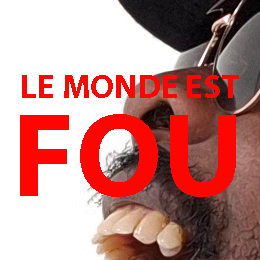
Ibrahima Sanogo, with whom I founded the Follown & McEwen company, called me one day and said those words. We were planning a performance based on Mujila’s novel, and those words seemed to connect his world with our own way of life here, and I liked that.
The novel begins with the words “In the beginning was the stone,” and this stone is mentioned several times throughout the novel. What does it mean?
The stone plays an even greater role in the stage adaptation than it does in the novel. It symbolizes the earth’s riches, what it promises, and the struggle it ignites. For the desire it arouses. For the suffering it brings to people in many parts of the world. Beyond the poetry, imperialism is the novel’s central theme.
There is a scene in the novel in which a reading of Lucien’s stage epic takes place, but little is revealed about the text itself. Why does this text play a central role in the production?
The fact that the text of the stage epic remains a blank space in the novel gave me the opportunity to link the reality of Europe with that of the novel. It’s not about a comparison—that wouldn’t make sense. It’s about the fact that the world as a whole is out of balance. The stone that’s still in our field is rolling, and no one knows where it’s headed.
The novel is steeped in sensuality. Is that also the case in the performance?
As far as the narrative is concerned, I had to reduce the number of characters; the young girls, the single moms, the ageless women, the waitresses and busboys—and with them, the “round dance of bodies” on Tram 83—have disappeared. But the sensuality of the author’s language is reflected in the music, which plays a central role in the performance. In addition to a few songs, there are several spoken-word pieces in which the words are accompanied by percussion and electronic sounds. The rhythm that emerges is part of what is being said.
Do the novel and the performance convey a message?
Both invite a free and open way of listening. There are no categories of “we” and “they,” so there is also no mental framework that so often allows us to judge before we listen. What is told in both—with and without words—could be called a creation story, and this story is surprising. That in itself is wonderful.
Lucien was a nuisance to us. He took it too far. What was the point of playing the intellectual everywhere when the equation remained the same? The path to truth and honesty leads through streets full of trash, dog poop, lies, power outages, and floods—so why did he firmly believe that such a world was possible?
Test image and test shots:
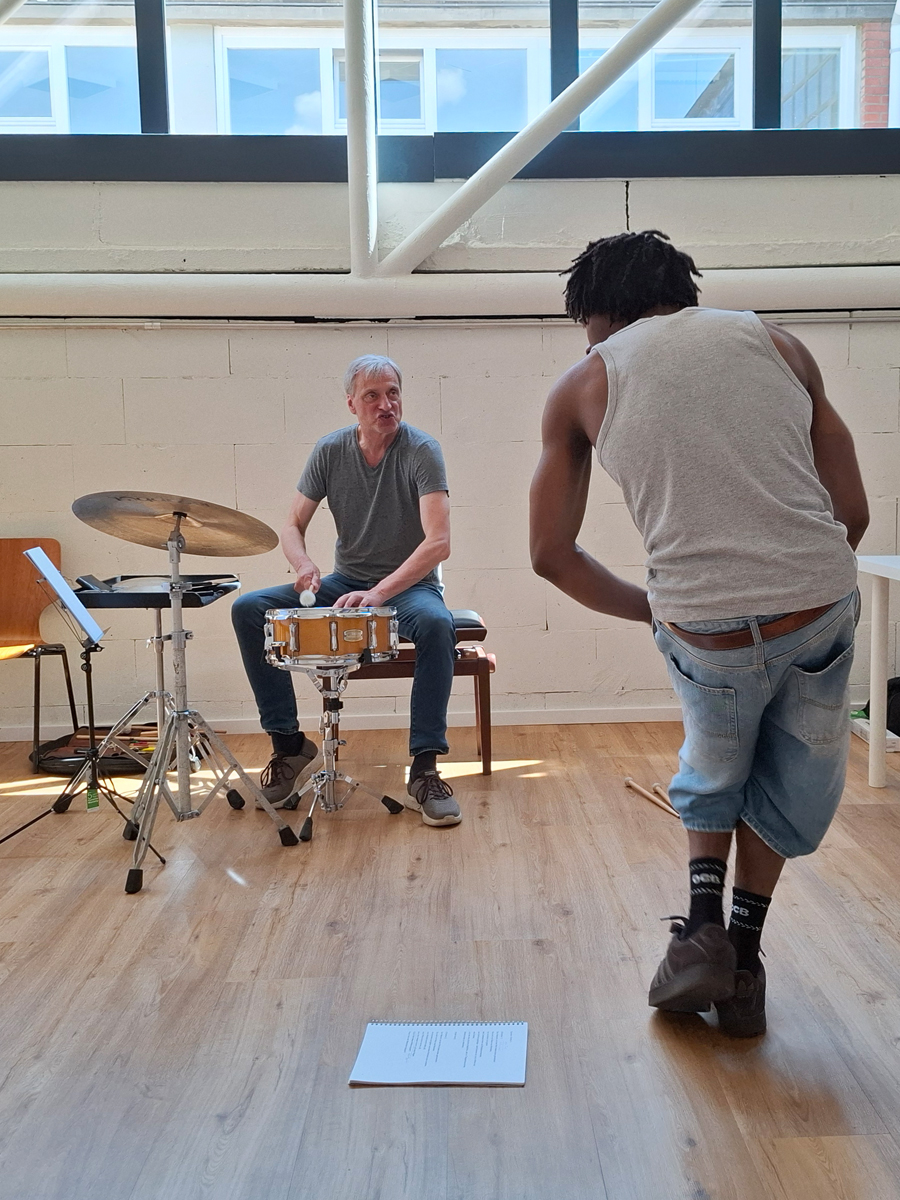
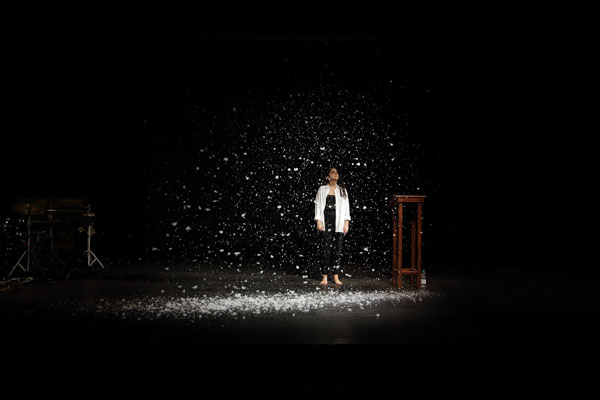
The diva in all her beauty: “I use sounds that blend with my own. I was born on a train, or so my adoptive mother told me. You know what I mean—the tracks, the vastness, the tracks, the exile…”
Supported by the Hamburg Authority for Culture and Media, the Hamburg-Mitte District Office, the Dachverband freie darstellende Künste e.V. (DfdK), and Wiese eG.
Thank you for your support!